


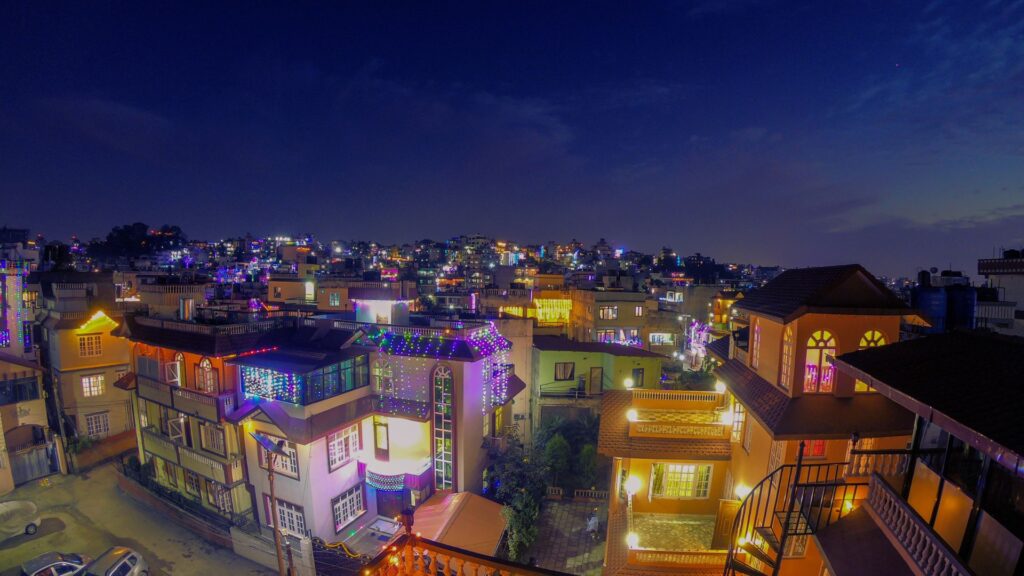
Tihar 2083 Nepal Tihar, also known as Yamapanchak or the Festival of Lights, stands as one of Nepal’s most beloved and culturally rich celebrations. Spanning five magical days in the autumn season, Tihar fills streets and homes across the country with golden oil lamps (diyas), vibrant marigold garlands, colourful rangoli art, and cheerful musical traditions.
Tihar is one of the most enjoyable festivals in Nepal. It is typically celebrated together with loved ones. People often join friends to perform ‘Bhailo’ (traditional singing and dancing) and dance to lively music at night. Following their cultural traditions, Nepalis engage in these ‘Bhailo’ festivities.
In many places, Nepalis celebrate Tihar with their families; celebrating together not only makes the occasion more enjoyable but also makes various tasks much easier. During Tihar, people decorate their homes with “diyos” (oil lamps) and various lights, and they also create “rangoli” (colourful patterns).
Five Days of Tihar 2083
Day 1: Kaag Tihar
The celebration opens with Kaag Tihar. In Hindu tradition, crows are revered as the loyal messengers of Yamaraj, the god of death. Early in the morning, households prepare delicacies, rice, and seeds, offering them on rooftops and in open courtyards.
Day 2: Kukur Tihar
The second day is dedicated to honouring dogs. Recognised for their unyielding loyalty, companionship, and guardianship, both pet dogs and street animals are adorned with floral garlands made of marigolds and marked with a sacred red tika on their foreheads.
Day 3: Gai Tihar and Laxmi Puja
The third day holds immense spiritual and social significance. In the morning, cows—symbols of prosperity, motherhood, and agricultural bounty—are worshipped with garlands and fresh fodder. As dusk approaches, communities transform into illuminated wonderlands for Laxmi Puja. In the evening, groups of young people visit neighbouring homes singing traditional Bhailo songs, spreading festive cheer and receiving blessings and sweets in return.
Day 4: Govardhan Puja, Goru Tihar, and Mha Puja
The fourth day features distinct celebrations across communities. Farmers perform Goru Tihar to honour oxen for their essential role in tilling the land. Concurrently, Govardhan Puja is observed to commemorate Lord Krishna lifting the Govardhan mountain to protect living beings.
Day 5: Bhai Tika
Sisters apply a special seven-colored tika on their brothers’ foreheads, place long-lasting makhamali (globe amaranth) flower garlands around their necks, and pray to Lord Yamaraj for their brothers’ longevity, health, and prosperity. Brothers present gifts and tokens of appreciation, reaffirming their pledge to protect and respect their sisters.
Tihar 2083 date in Nepal
Tihar 2083 BS in Nepal runs from Saturday, November 7, 2026 through Wednesday, November 11, 2026 (Kartik 21–25, 2083 BS).
Bhai Tika 2083 date Nepal
In Nepal, Bhai Tika 2083 falls on Wednesday, November 11, 2026 (Kartik 25, 2083 BS).
Kukur Tihar 2083 date
In Nepal, Kukur Tihar 2083 falls on Sunday, November 8, 2026 (Kartik 22, 2083 BS).
Tihar 2083 Laxmi Puja date
In Nepal, Laxmi Puja 2083 BS falls on Monday, November 9, 2026 (Kartik 23, 2083 BS).
Conclusion
Tihar 2083, the festival brings people together in a shared spirit of optimism, joy, and light over darkness. Tihar reflects the deep ecological harmony embedded within Nepali heritage. By dedicating specific days to birds, animals, nature, self-reflection, and family connections, the festival serves as a timely reminder of gratitude, unity, and environmental balance.
Tihar is a very important festival for the Nepali people, celebrated collectively by everyone. Various programs and activities are organised during this festival. People often dance together and have a great time during the ‘Bhailo’ (traditional singing and dancing rounds). The day of Laxmi Puja is particularly festive; people enjoy traditional breads (sel roti) and engage in various other celebratory activities.
‘Rangoli’ (colourful patterns) are also created near the homes—specifically at the main entrance—often featuring designs made with seven different colours. Many people in Nepal participate in their respective traditions and activities during Tihar 2083.